Air Sealing That Stops Energy Loss
Spray Foam Insulation in Midland for residential, commercial, industrial, and agricultural buildings with high heating and cooling costs
Uncontrolled air leakage through walls, attics, and crawl spaces forces HVAC systems to run continuously just to maintain comfortable temperatures, driving up energy costs and creating uneven heating and cooling throughout buildings in Midland. Spray foam insulation applied by Tucker's ProFoam Insulation, LLC expands on contact to fill gaps, seal cracks, and create a continuous barrier that stops air movement at the building envelope. This process addresses the primary cause of energy waste in most structures: the constant exchange of conditioned indoor air with unconditioned outdoor air through poorly sealed framing, around penetrations, and at transitions between building materials where traditional insulation leaves gaps.
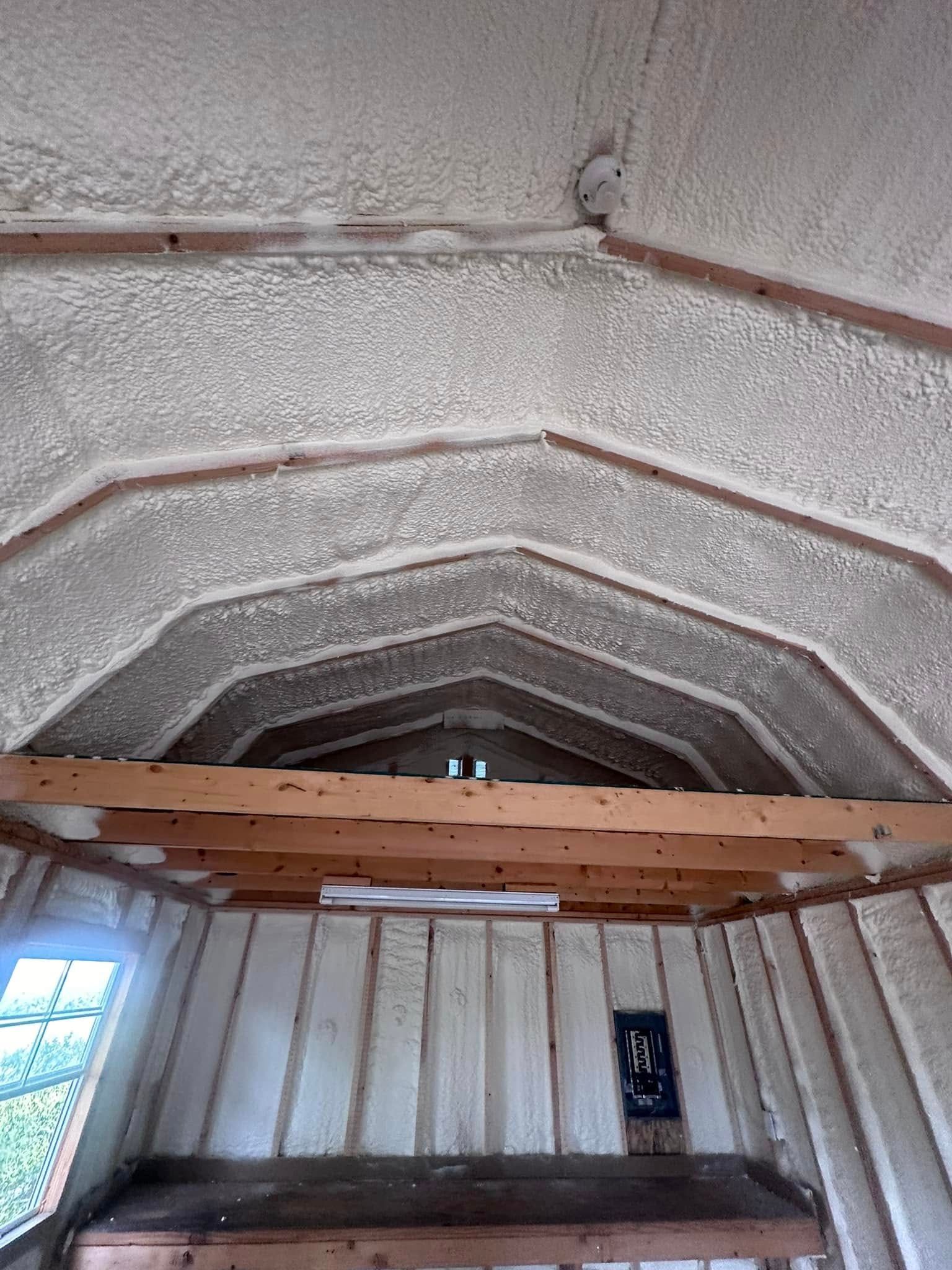
The insulation is spray-applied as a liquid that expands and cures into a rigid foam, adhering to framing members, sheathing, and irregular surfaces where batt or blown insulation cannot create an effective seal. This method works for new construction where the building envelope is being sealed from the start, and for existing buildings where insulation upgrades are needed to reduce energy consumption and improve comfort.
Request an insulation evaluation to identify air leakage points and determine foam thickness requirements for your building type.
Why Air Sealing Works for Energy Efficiency
Application involves spraying foam into wall cavities, attic spaces, or crawl spaces where it expands to fill voids and adheres to surrounding surfaces, creating a monolithic insulation layer that also acts as an air barrier. The expansion process allows the foam to reach into irregular spaces around wiring, plumbing, and framing that would remain uninsulated with traditional methods.
Tucker's ProFoam Insulation, LLC calibrates foam density and thickness based on the building's use, climate zone requirements, and existing insulation performance. After the foam cures, you'll notice that temperature differences between rooms diminish, drafts around windows and outlets disappear, and your HVAC system cycles less frequently because conditioned air is no longer escaping through the building envelope. Utility bills drop measurably in the first full billing cycle after installation, and indoor comfort improves even during Midland's temperature extremes when outdoor conditions shift rapidly.
The insulation provides long-term performance without settling or degrading the way fiberglass batts do over time, but it does not address moisture problems caused by poor drainage, plumbing leaks, or inadequate ventilation in conditioned spaces. Buildings with active moisture issues need those problems resolved before foam installation to prevent trapping water vapor inside the building envelope.
Pinpoint Your Energy Leaks with Thermal Drone Inspections
You can't fix an air leak if you don't know where it is. To help you maximize your climate control and slash utility bills, we now offer Free Drone Inspections featuring Thermal Imaging technology.
Flying directly over your property, our drones look through the surface to find:
- Conditioned Air Loss: See exactly where your expensive heating or AC is escaping into the atmosphere.
- Thermal Bridges: Locate weak points in your current insulation framework.
Once our drone maps out the energy-robbing problem areas, our Spray Foam Insulation seals those gaps completely, locking in a stable interior climate.
Common Questions About This Service
Property owners throughout Midland ask about application details and performance expectations for different building types before committing to foam insulation.
What is the difference between open-cell and closed-cell spray foam?
Open-cell foam is lighter and less expensive but provides lower R-value per inch, while closed-cell foam is denser, offers higher R-value, and acts as a vapor barrier, making it suitable for applications where moisture control is critical.
How long does spray foam insulation last?
Properly installed foam insulation maintains its R-value and air-sealing properties for the life of the building, unlike fiberglass or cellulose that can settle, compress, or absorb moisture and lose effectiveness over time.
Can spray foam be applied in extreme temperatures?
Application requires surface temperatures within a specific range for proper adhesion and curing, so projects are scheduled during weather conditions that allow the foam to expand and cure correctly without compromising performance.
What spaces in a building benefit most from spray foam?
Attics, crawl spaces, exterior walls, and rim joists are common targets because these areas typically have the highest air leakage rates and contribute most significantly to energy loss in residential and commercial buildings.
How does foam insulation perform in Midland's climate?
The material handles temperature extremes well and does not degrade under UV exposure when installed in enclosed spaces, making it effective for buildings in West Texas where daily temperature swings and high summer heat stress traditional insulation materials.
Tucker's ProFoam Insulation, LLC installs spray foam insulation in residential, commercial, industrial, and agricultural buildings throughout Midland and neighboring service markets. Arrange a site visit to assess your building's current insulation performance and receive a detailed recommendation based on energy goals and budget considerations.