
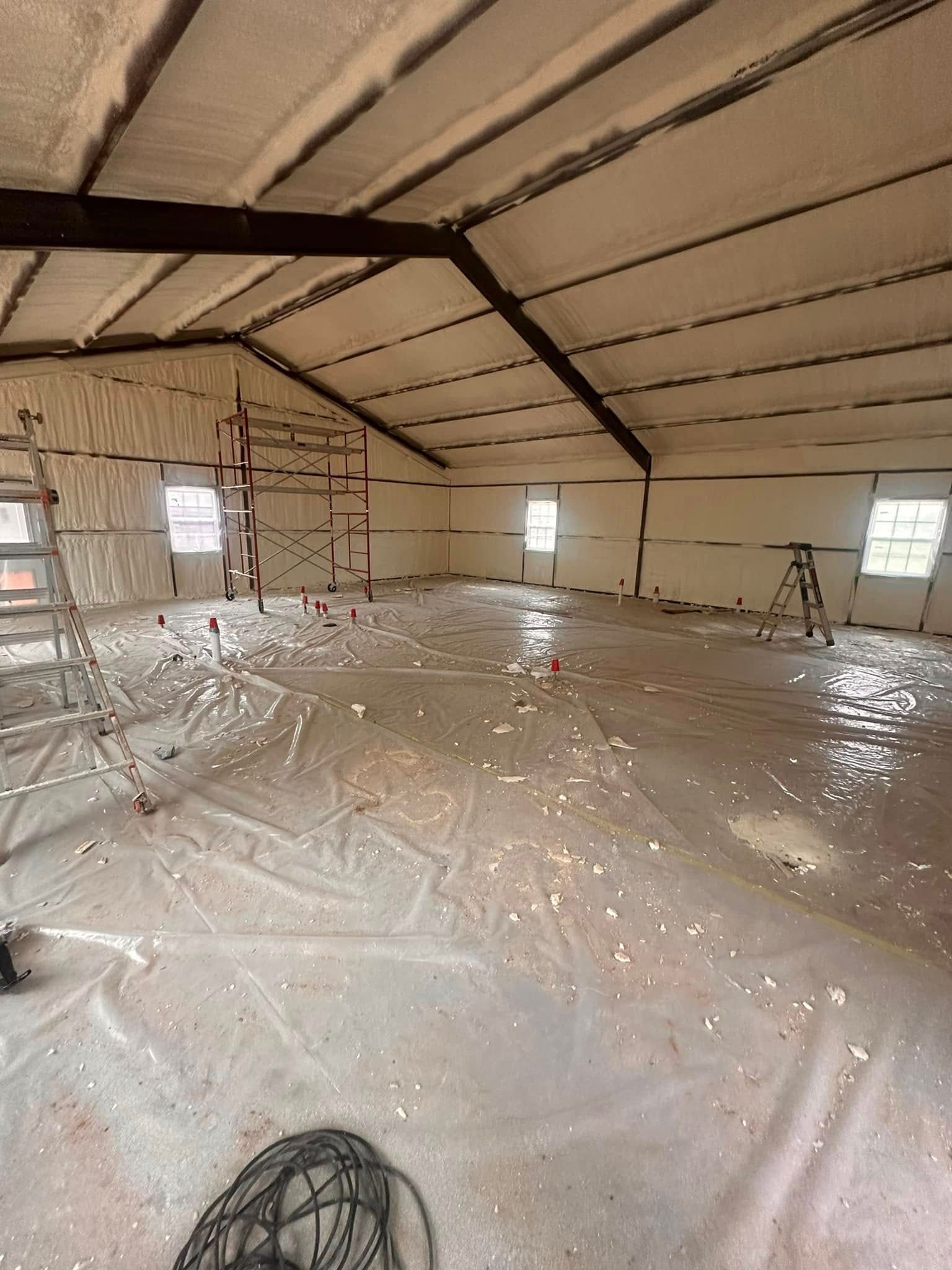
Insulation for Structures Housing Equipment and Livestock
Agricultural Building Insulation in Midland for Barns, Equipment Storage, and Farm Facilities Requiring Temperature Stability and Moisture Control
Barns and agricultural storage buildings face temperature extremes that stress livestock, degrade stored feed, and accelerate rust on equipment exposed to condensation cycles. Spray foam insulation creates a controlled interior environment by sealing the building envelope and adding thermal resistance to walls and roof assemblies. Tucker's ProFoam Insulation, LLC works with agricultural property owners across Midland and surrounding rural areas to design insulation systems that address the specific demands of farming operations, from ventilated livestock barns requiring consistent airflow patterns to enclosed equipment storage protecting machinery investments from humidity and temperature swings.
Agricultural buildings constructed from metal panels or pole-frame assemblies allow air infiltration through panel seams, door thresholds, and the gaps inherent in agricultural construction where weathertightness often takes second priority to functionality. Spray foam seals these openings while insulating against conductive heat transfer, reducing the energy required to maintain target temperatures in climate-controlled facilities and moderating temperature swings in unconditioned structures where livestock or stored materials benefit from thermal stability.
Request a consultation to review your facility layout, current temperature challenges, and how insulation systems can protect agricultural investments.
Why Agricultural Facilities Require Specialized Insulation
Agricultural insulation projects differ from standard commercial applications because buildings often include natural ventilation systems, high moisture loads from animal respiration or stored crops, and structural elements like exposed trusses or purlins that create thermal bridging paths. Spray foam application accounts for these factors by sealing air leakage points without blocking intentional ventilation openings and by insulating structural members to prevent condensation on cold surfaces during winter months when interior humidity levels rise.
After insulation installation, livestock facilities maintain more consistent temperatures that reduce animal stress during heat waves and cold snaps, equipment storage buildings eliminate the condensation that forms on metal surfaces and tools during overnight cooling, and workshop areas become comfortable enough for extended repair work without auxiliary heating. The insulation system also reduces dust infiltration in buildings storing hay or feed, as the sealed envelope prevents wind-driven air from carrying particulates through wall and roof gaps.
Insulation systems for agricultural buildings address varying performance needs depending on whether the structure houses temperature-sensitive livestock like poultry or dairy cattle, stores equipment requiring dry conditions to prevent corrosion, or provides workshop space where year-round comfort improves productivity. Closed-cell foam formulations resist moisture absorption and provide structural rigidity that can reduce racking in pole-frame buildings, while the material's resistance to mold and mildew suits environments with elevated humidity levels.
Answers to Frequent Questions About Farm Building Insulation
Agricultural property owners evaluating insulation options often have questions about how spray foam performs in buildings with unique ventilation needs, high dust levels, and exposure to ammonia or other agricultural chemicals.
How does insulation affect ventilation systems in livestock barns?
Spray foam is applied around intentional ventilation openings like ridge vents, gable louvers, and exhaust fans, sealing unintentional leaks while preserving designed airflow paths. Properly insulated barns allow ventilation systems to work more efficiently because outdoor air enters only through controlled inlets rather than through random gaps in the building envelope.
What insulation thickness works best for equipment storage buildings in Midland's climate?
Equipment storage facilities typically receive two to three inches of closed-cell foam on walls and roof decking, providing enough thermal resistance to moderate daily temperature swings and prevent condensation without the higher R-values required for climate-controlled spaces. The goal is moisture control and temperature moderation rather than maintaining specific setpoints.
Can spray foam insulation withstand the dust and ammonia exposure common in agricultural environments?
Closed-cell spray foam cures into a rigid, inert material that does not support microbial growth and resists chemical exposure from typical agricultural operations. The surface can be cleaned if dust accumulation occurs, and the material does not degrade from ammonia off-gassing in livestock facilities.
How does insulation impact heating costs for workshop areas within agricultural buildings?
Insulated workshop spaces require significantly less energy to heat because the foam eliminates drafts and reduces heat loss through walls and ceiling assemblies. Portable heaters or radiant tube systems maintain comfortable working temperatures with less fuel consumption, and the space retains heat longer after equipment is turned off.
What preparation is required before insulating a pole barn or metal agricultural building?
Surfaces should be dry and free from loose dirt or debris that would prevent foam adhesion. Electrical wiring and any plumbing lines must be installed and inspected before foam application, and items stored inside the building need to be removed or covered to prevent overspray during installation.
Tucker's ProFoam Insulation, LLC designs agricultural insulation systems around the specific conditions and performance requirements of each facility type, from livestock barns requiring precise ventilation balance to equipment storage buildings where moisture control protects valuable machinery. Schedule a site visit to discuss your building's current performance and explore insulation options tailored to agricultural operations in the Midland area.